Showing posts with label Translation. Show all posts

Sunday, May 6, 2018

SAPPHO: Poetry

A few selections from the Greek poet Sappho (translated by Mary Barnard):


#39 He is more than a hero

He is a god in my eyes—
the man who is allowed
to sit beside you—he
 
who listens intimately
to the sweet murmur of
your voice, the enticing

laughter that makes my own
heart beat fast.  If I meet
you suddenly, I can’t

speak—my tongue is broken;
a thin flame runs under
my skin; seeing nothing,

hearing only my own ears
drumming, I drip with sweat;
trembling shakes my body

and I turn paler than
dry grass.  At such times
death isn’t far from me.


#44 Without warning

as a whirlwind
swoops on an oak
Love shakes my heart.


#45 If you will come

I shall put out
New pillows for
You to rest on.


#65 Persuasion

Aphrodite’s
daughter, you
cheat mortals.


#53 With his venom

Irresistible
and bittersweet

that loosener
of limbs, Love

reptile-like
strikes me down.


#41 To an army wife, in Sardis:

Some say a cavalry corps,
some infantry, some, again,
will maintain that the swift oars

of our fleet are the finest
sight on dark earth; but I say
that whatever one loves, is.

This is easily proved: did
not Helen—she who had scanned
the flower of the world’s manhood—

choose as first among men one
who laid Troy’s honor in ruin?
warped to his will, forgetting

love due her own blood, her own
child, she wandered far from him.
So Anactoria, although you

being far away forget us,
the dear sound of your footstep
and light glancing in your eyes

would move me more than glitter
of Lydian horse or armored
tread of mainland infantry


#84 If you are squeamish

Don’t prod the
beach rubble.


*See Mary Barnard's translations of Sappho's poetry, introduced by Dudley Fitts, published by the University of California Press.

Sunday, February 11, 2018

Lao Tzu: "The Uses of Not"


THE USES OF NOT

Thirty spokes
meet in the hub.
Where the wheel isn't
is where it's useful.

Hollowed out,
clay makes a pot.
Where the pot's not
is where it's useful.

Cut doors and windows
to make a room.
Where the room isn't,
there's room for you.

So the profit in what is
is in the use of what isn't.

--Lao Tzu

from Ursula K. Le Guin's
Lao Tzu: Tao Te Ching: 
A Book About the Way and the Power of the Way

Tuesday, January 12, 2016

Translation

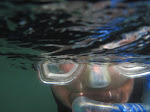
I'm working on a story about a dead diver (from the POV of the surviving dive partner), and so I made these images today.  

Perhaps, that survivor's the one lacking a state of grace.

I call the shot above "Translation" -- 
     Rodeo Beach; 
     clay mask (Triton); 
     vintage diving mask (used continuously 1960s-70s).


Translation #3:
A visual poem, I hope.

Wednesday, January 1, 2014

Crossley-Holland: An Anglo-Saxon Riddle


 RIDDLE 61

A woman, young and lovely, often locked me 
in a chest; she took me out at times,
lifted me with fair hands and gave me 
to her loyal lord, fulfilling his desire. 
Then he stuck his head well inside me, 
pushed it upwards into the smallest part.
It was my fate to be filled with something 
coarse if that person who possessed me 
was virile enough. Now guess my name.

--translated by Kevin Crossley-Holland


Solution: 61 -- Helmet

The Exeter Book Riddles, translated by Kevin Crossley-Holland,
Penguin Books, ______.

Friday, December 27, 2013

Pound's "Villonaud For This Yule"


VILLONAUD FOR THIS YULE

Towards the Noel that morte saison
(Christ make the shepherds' homage dear!) 
Then when the grey wolves everychone
Drink of the winds their chill small-beer
And lap o' the snows food's gueredon
Then makyth my heart his yule-tide cheer
 (Skoal! with the dregs if the clear be gone!)
Wineing the ghosts of yester-year.

Ask ye what ghost I dream upon?
(What of the magians' scented gear?) 
The ghosts of dead loves everyone
That make the stark winds reek with fear
Lest love return with the foison sun
And slay the memories that me cheer
(Such as I drink to mine fashion)
Wineing the ghosts of yester-year.

Where are the joys my heart had won?
(Saturn and Mars to Zeus drawn near!) 
Where are the lips mine lay upon,
Aye! where are the glances feat and clear
That bade my heart his valor don?
I skoal to the eyes as grey-blown mere
(Who knows whose was that paragon?)
Wineing the ghosts of yester-year.

Prince: ask me not what I have done
Nor what God hath that can me cheer
But ye ask first where the winds are gone
Wineing the ghosts of yester-year.

--Ezra Pound

Friday, December 20, 2013

"The Wanderer": Burton Raffel Translates From The Old English


THE WANDERER

This lonely traveller longs for grace,
For the mercy of God; grief hangs on
His heart and follows the frost-cold foam
He cuts in the sea, sailing endlessly,
Aimlessly, in exile. Fate has opened
A single port: memory. He sees
His kinsmen slaughtered again, and cries:
               “I’ve drunk too many lonely dawns,
Grey with mourning. Once there were men
To whom my heart could hurry, hot
With open longing. They’re long since dead.
My heart has closed on itself, quietly
Learning that silence is noble and sorrow
Nothing that speech can cure. Sadness
Has never driven sadness off;
Fate blows hardest on a bleeding heart.
So those who thirst for glory smother
Secret weakness and longing, neither
Weep nor sigh nor listen to the sickness
In their souls. So I, lost and homeless,
Forced to flee the darkness that fell
On the earth and my lord.
                         Leaving everything,
Weary with winter I wandered out
On the frozen waves, hoping to find
A place, a people, a lord to replace
My lost ones. No one knew me, now,
No one offered comfort, allowed
Me feasting or joy. How cruel a journey
I’ve traveled, sharing my bread with sorrow
Alone, an exile in every land,
Could only be told by telling my footsteps.
For who can hear: “friendless and poor,”
And know what I’ve known since the long cheerful nights
When, young and yearning, with my lord I yet feasted
Most welcome of all. That warmth is dead.
He only knows who needs his lord
As I do, eager or long-missing aid;
He only knows who never sleeps
Without the deepest dreams of longing.
Sometimes it seems I see my lord,
Kiss and embrace him, bend my hands
And head to his knee, kneeling as though
He still sat enthroned, ruling his thanes.
And I open my eyes, embracing the air,
And I see the brown sea-billows heave,
See the sea-birds bathe, spreading
Their white-feathered wings, watch the frost
And the hail and the snow. And heavy in heart
I long for my lord, alone and unloved.
Sometimes it seems I see my kin
And greet them gladly, give them welcome,
The best of friends. They fade away,
Swimming soundlessly out of sight,
                         Leaving nothing.
How loathsome become
The frozen waves to a weary heart.
               In this brief world I cannot wonder
That my mind is set on melancholy,
Because I never forget the fate
Of men, robbed of their riches, suddenly
Looted by death—the doom of earth,
Sent to us all by every rising
Sun. Wisdom is slow, and comes
But late. He who has it is patient;
He cannot be hasty to hate or speak,
He must be bold and yet not blind,
Nor ever too craven, complacent, or covetous,
Nor ready to gloat before he wins glory.
The man’s a fool who flings his boasts
Hotly to the heavens, heeding his spleen
And not the better boldness of knowledge.
What knowing man knows not the ghostly,
Waste-like end of worldly wealth:
See, already the wreckage is there,
The wind-swept walls stand far and wide,
The storm-beaten blocks besmeared with frost,
The mead-halls crumbled, the monarchs thrown down
And stripped of their pleasures. The proudest of warriors
Now lie by the wall: some of them war
Destroyed; some the monstrous sea-bird
Bore over the ocean; to some the old wolf
Dealt out death; and for some dejected
Followers fashioned an earth-cave coffin.
Thus the Maker of men lays waste
This earth, crushing our callow mirth.
And the work of old giants stands withered and still.”

He who these ruins rightly sees,
And deeply considers this dark twisted life,
Who sagely remembers the endless slaughters
Of a bloody past, is bound to proclaim:
          “Where is the war-steed? Where is the warrior?
                         Where is his war-lord?
Where now the feasting-places?
Where now the mead-hall pleasures?
Alas, bright cup! Alas, brave knight!
Alas, you glorious princes! All gone,
Lost in the night, as you never had lived.
And all that survives you a serpentine wall,
Wondrously high, worked in strange ways.
Mighty spears have slain these men,
Greedy weapons have framed their fate.
                These rocky slopes are beaten by storms,
This earth pinned down by driving snow,
By the horror of winter, smothering warmth
In the shadows of night. And the north angrily
Hurls its hailstorms at our helpless heads.
Everything earthly is evilly born,
Firmly clutched by a fickle Fate.
Fortune vanishes, friendship vanishes,
Man is fleeting, woman is fleeting,
And all this earth rolls into emptiness.”

               So says the sage in his heart, sitting alone with
                              His thought.
It's good to guard your faith, nor let your grief come forth
Until it cannot call for help, nor help but heed
The path you've placed before it.  It's good to find your grace
In God, the heavenly rock where rests our every hope.

--translated by Burton Raffel,
borrowed from Beowulf and Related Readings,
McDougall Littell; Evanston, Illinois; 1998.

Saturday, November 16, 2013

Seamus Heaney: The Boat-Funeral from "Beowulf"


Shield was still thriving when his time came
and he crossed over into the Lord's keeping.
His warrior band did what he bade them
when he laid down the law among the Danes:
they shouldered him out to the sea's flood,
the chief they revered who had long ruled them.
A ring-whorled prow rode in the harbour,
ice-clad, outbound, a craft for a prince.
They stretched their beloved lord in his boat,
laid out by the mast, amidships,
the great ring-giver. Far-fetched treasures
were piled upon him, and precious gear
I never heard before of a ship so well furbished
with battle tackle, bladed weapons
and coats of mail. The massed treasure
was loaded on top of him: it would travel far
on out into the ocean's sway.
They decked his body no less bountifully
with offerings than those first ones did
who cast him away when he was a child
and launched him alone out over the waves.
And they set a gold standard up
high above his head and let him drift
to wind and tide, bewailing him
and mourning their loss. No man can tell,
no wise man in hall or weathered veteran
knows for certain who salvaged that load.

-- translated by Seamus Heaney


Wednesday, December 26, 2012

Heaney: Beowulf Takes His Trophy


from Seamus Heaney's translation of the Old English Beowulf, a favorite passage of mine.  But then most of the poem qualifies as such.


A light appeared and the place brightened
the way the sky does when heaven's candle
is shining clearly.  He inspected the vault:
with sword held high, its hilt raised
to guard and threaten, Hygelac's thane
scouted along the wall in Grendel's wake.
Now the weapon was to prove its worth.
The warrior determined to take revenge
for every gross act Grendel had committed --
and not only for that one occasion
when he'd come to slaughter the sleeping troops,
fifteen of Hrothgar's house-guards
surprised on their benches and ruthlessly devoured,
and as many again carried away,
a brutal plunder.  Beowulf in his fury
now settled that score: he saw the monster
in his resting-place, war-weary and wrecked,
a lifeless corpse, a casualty
of the battle in Heorot.  The body gaped
at the stroke dealt to it after death:
Beowulf cut the corpse's head off.

Immediately the counsellors keeping a lookout
with Hrothgar, watching the lake water,
saw a heave-up and surge of waves
and blood in the backwash.  They bowed grey heads,
spoke in their sage, experienced way
about the good warrior, how they never again
expected to see that prince returning
in triumph to their king.  It was clear to many
that the wolf of the deep had destroyed him forever.

The ninth hour of the day arrived.
The brave Shieldings abandoned the cliff-top
and the king went home; but sick at heart,
staring at the mere, the strangers held on.
They wished, without hope, to behold their lord,
Beowulf himself.

                     Meanwhile, the sword
began to wilt into gory icicles,
to slather and thaw.  It was a wonderful thing,
the way it melted as ice melts
when the Father eases the fetters off the frost
and unravels the water-ropes, He who wields power
over time and tide: he is the true lord.

The Geat captain saw treasure in abundance
But carried no spoils from those quarters
except for the head and the inlaid sword-hilt
embossed with jewels; its blade had melted
and the scrollwork on it burnt, so scalding was the blood
of the poisonous fiend who had perished there.
Then away he swam, the one who had survived
the fall of his enemies, flailing to the surface.
The wide water, the waves and pools,
were no longer infested once the wandering fiend
let go of her life and this unreliable world.
The seafarers' leader made for land,
resolutely swimming, delighted with his prize,
the mighty load he was lugging to the surface.
His thanes advanced in a troop to meet him,
thanking God and taking great delight
in seeing their prince back safe and sound.
Quickly the hero's helmet and mail-shirt
were loosed and unlaced.  The lake settled,
clouds darkened above the bloodshot depths.


Seamus Heaney, translator:
Beowulf: A New Translation,
Faber and Faber, Ltd: London, 1999:
pages 51-53.

Saturday, October 13, 2012

Three Coins from Guy Davenport


I love Guy Davenport's fine collection of critical essays: The Geography of the Imagination.  He had such a breadth and depth of knowledge, literary and humane, that he was able to bring to bear at a moment's notice, or so it feels, time and again.  Many of the essays began as lectures, composed while Davenport walked from his house to the university.  I wish I'd been in more than a few of those classes.

Here, I just want to share three quotations plucked almost at random from that fine book.

"Translation involves two languages; the translator is in constant danger of inventing a third that lies between, a treacherous nonexistent language suggested by the original and not recognized by the language into which the original is being transposed."

--from "Another Odyssey"


"Plutarch in the first structuralist study of myth, Isis and Osiris, demonstrates that there is no one way of telling the tales of the tribe. A myth is a pattern, not a script."

-- from "That Faire Field of Enna"


"Sir Walter Scott, out hunting and with some good lines suddenly in his head, brought down a crow, whittled a pen from a feather, and wrote the poem on his jacket in crow's blood."

--from "Finding"

Saturday, June 9, 2012

The Tide Is Low: Mask and Kelp


Triton Beached (detail).


Perhaps an ancient Greek poet can help us here:

Desire the limb-loosener,
O my companion,
Has beat me down.


--Archilochos

(Translated by Guy Davenport in 7 Greeks.)


Or, perhaps, we should recall a poem by W.B. Yeats I've posted once before here.
His poem begins . . .

I am worn out with dreams;
A weather-worn, marble triton
Among the streams . . . .

Friday, May 11, 2012

"Giving What I Have" : Peter Green, Translating the Argonautika, and the Enjoyment of Reading


Classicist Peter Green is an inspiring scholar, translator, and novelist.  I've quoted from his excellent The Laughter of Aphrodite: A Novel About Sappho of Lesbos here, and now I'm returning to his translation of Apollonius of Rhodes' epic poem of Jason and the Argonauts.  I picked up this book eleven years ago for my 40th birthday, and as my 51st approaches, it feels right to revisit a favorite tale of adventure and desire.  

I'd like to quote Green on translating this epic poem as a "labor of love" and on formative experiences regarding scholarship and, more importantly, reading for enjoyment.  I'm in Green's camp, quite obviously, and I have a deep attachment to tales of the heroic Greeks as well.  


In his "Preface and Acknowledgements," Peter Green writes:


Working on the Argonautika has been for me very much a labor of love.  At the age of seven I first encountered, and was fascinated by, the quest for the Golden Fleece in that brilliant volume by Andrew Lang, Tales of Troy and Greece, never yet surpassed as a retelling of ancient myth for young people.*  Years later, reading Boswell's Life of Johnson, I came across this passage:

"And yet, (said I) people go through the world very well, and carry on the business of life to good advantage, without learning."  Johnson: "Why, Sir, that may be true in cases where learning cannot possibly be of any use; for instance, this boy rows us as well without learning, as if he could sing the song of Orpheus to the Argonauts, who were the first sailors."  He then called to the boy, "What would you give, my lad, to know about the Argonauts?"  "Sir, (said the boy) I would give what I have."

The boy's words, then and even today, struck an emotional chord that hit me directly and physically, just as a certain high-frequency note drawn from a violin will shatter a wineglass.   In one sense I have been giving what I have in pursuit of those bright, elusive, infinitely rewarding Sirens ever since.  The anecdote seems to me the best justification ever put forward for a truly humane education.

This is, I know, quite hopelessly old-fashioned and romantic.  Robert Graves somewhere recalls his dismay at the reply he got from an earnest student of English literature when he asked her what she enjoyed about Shakespeare's (I think) work.  "I don't read to enjoy," she said, in withering reproof, "I read to evaluate."  The absence of genuine pleasure is what makes too much literary criticism today an aridly sterile desert.  Despite this I still retain my deep instinctive responses to great art and literature, though a quarter of a century's exposure to American academic critical trends has come as near to killing such reactions in me as anything could do.  In that sense the present work may count as an act of calculated defiance, as well as an invitation to relish one of the Hellenic world's oldest and most deeply resonant myths, told by a master of his craft, who loved the sea, and ships, and the complexities of human nature, and let that passion irradiate everything he wrote.

--from The Argonautika: The Story of Jason and the Quest for the Golden Fleece by Apollonios Rhodios, Translated, with Introduction and Glossary By Peter Green,
University of California Press: Berkeley, Los Angeles, London, 1997: pages xii-xiii.


I'd almost forgotten Green's footnote to the passage above.  Here it is:


*Lang, together with The Heroes of Asgard and several other highly formative texts, was put into my hands during the three years, form six to eight, that I spent at an English P.N.E.U. (Parents' National Educational Union) school, before being transferred to the less congenial rigors of prep and boarding schools.  Most of the serious permanent passions of my later life (including the study of classics as a profession, and the absorption of world literature and music for the sheer fun of it) had their roots in my P.N.E.U. days.  I did not get any remotely comparable stimulation and excitement until I returned to Cambridge after World War II as an elderly (I thought) I was twenty-three) ex-service undergraduate.

Sunday, May 6, 2012

MUSE

Across the pale stillness
of water keel-carven, these lovely eyes of desire
drag the ship to her doom.

--Simonides of Ceos

(translated by Richmond Lattimore)

-- I like the description, the phrasing and the images themselves, but I also like the paradox.  The water is calm, and yet the ship goes to its doom.
All for love, or desire, which isn't the same thing, is it? --


(TV screen-shot from John Stockwell's Into the Blue.)

Somehow, this juxtaposition is working for me, though perhaps an eye-to-eye shot of Sophia Loren would work well too: Boy On A Dolphin.

Saturday, August 6, 2011

"The University of the Waves": Neruda's "El Mar"

THE SEA

I need the sea because it teaches me.
I don't know if I learn music or awareness,
if it's a single wave or its vast existence,
or only its harsh voice or its shining
suggestion of fishes and ships.
The fact is that until I fall asleep,
in some magnetic way I move in
the university of the waves.

It's not simply the shells crunched
as if some shivering planet
were giving signs of its gradual death;
no, I reconstruct the day out of a fragment,
the stalactite from a sliver of salt,
and the great god out of a spoonful.

What it taught me before, I keep. It's air,
ceaseless wind, water and sand.

It seems a small thing for a young man,
to have come here to live with his own fire;
nevertheless, the pulse that rose
and fell in its abyss,
the crackling of the blue cold,
the gradual wearing away of the star,
the soft unfolding of the wave
squandering snow with its foam,
the quiet power out there, sure
as a stone shrine in the depths,
replaced my world in which were growing
stubborn sorrow, gathering oblivion,
and my life changed suddenly:
as I became part of its pure movement.

--Pablo Neruda

translated by Alastair Reed


from Pablo Neruda, On the Blue Shore of Silence: Poems of the Sea,
Harper-Collins, New York, 2003.

A great thematic and illustrated volume of Neruda's poetry: highly recommended!

P.S. If you'd like Neruda's original Spanish, seek out On the Blue Shore of Silence, which offers both Neruda's Spanish and Reid's English translations, or contact me.

Photos: Monastery Beach, Carmel, CA. June 20th, 2011.
(If you can click for a close-up of the top photo, you may see the foam acting funky. I love waves and all the permutations of flow and foam.)

Saturday, May 7, 2011

Swimming with Neruda: "Drunk with Pines"

"My solid marine madness": W.S. Merwin's translation of Neruda's "el solido frenesi marino" is a phrase that speaks to me, that calls for me. Riptides of the soul; passion's relentless currents. What did T.S. Eliot offer in this regard? Something about Phlebas, "As he rose and fell / He passed the stages of his age and youth / Entering the whirlpool"--and "Consider Phlebas, who was once as handsome and tall as you." Or, to shift to a beloved passage from Shakespeare's Tempest: "full fathoms five / thy father lies."

Water--whether held in check or fiercely flowing, the undersea realm, anything marine-- means mortal transformation, means death for most poets, but not for Homer, and not for Neruda.

Pablo Neruda is offering a more immediate drama of "marine madness," of aquatic passion that is suffered and that transcends. Neruda puts us into the midst of the sea-change, first keeps us in the curl of the wave and then within the first two fathoms or so of the surface, though there's plenty of depth here.

In the third stanza below, I see the surfer, though Neruda most likely had a swimmer in mind, though in the earlier stanzas the speaker could be a sailor or, more likely, a passenger on a boat. In this third stanza, I see this body-surfer riding the wave in a mix of frustration and ecstasy-- "mounted" and then "becalmed"--and ending with that lovely, haunting phrase: "in the throat of the fortunate isles / that are white and sweet as cool hips"; "en las garganta de las afortunadas / islas blancas y dulces como caderas frescas."

"Drunk with Pines" is the ninth poem in Viente Poemas de Amor y una Cancion Desesperada from 1924, when Neruda was only twenty years old. I've commented in the previous blog entry about Neruda's passion and poetics. His imagery can be both strikingly clear and paradoxical, evocative and mysterious. (I'll admit I don't always understand certain phrases, certain lines --or at least not yet-- but I don't find that uncertainty the obstacle it would be with other poets.) In particular, the depth of longing that informs the vivid imagery makes this volume a particular favorite for so many people.

Here, I want to share the ninth poem in both Neruda's original Spanish and W.S. Merwin's English translation. As I've said before, I have mostly lost my high school level Spanish, though with my rusty Latin, a dictionary, and a translation alongside, I do enjoy working my way through Neruda's original poetry, reading aloud as best I can to hear the music, the considerable music, of this Chilean poet.

And, that final image of the paired swimmers, "quick and slow, in the energy under the sky" -- "rapido y lento en la energia subceleste."

IX. Ebrio De Trementina

Ebrio de trementina y largos besos,
estival, el velero de las roasas dirijo,
torcido hacia la muerte del delgado dia,
cimentado en el solido frenesi marino.

Palido y amarrado a mi agua devorante
cruzo en el agrio olor del clima descrubierto,
aun vestido de gris y sonidos amargos,
y una cimera triste de abandonada espuma.

Voy, duro de pasiones, montado en mi ola unica,
lunar, solar, ardiente y frio, repentino,
dormido en la garganta de las afortunadas
islas blancas y dulces como caderas frescas.

Tiembla en la noche humeda mi vestido de besos
locamente cargado de electricas gestiones,
de modo heroico dividido en suenos
y embriagadoras rosas practicandose en mi.

Aguas arribe, en medio de las olas externas,
tu paralelo cuerpo se sujeta en mis brazos
como un pez infinitamente pegado a mi alma
rapido y lento en la energia subceleste.

IX. Drunk with Pines

Drunk with pines and long kisses,
like summer I steer the fast sail of the roses,
bent towards the death of the thin day,
stuck into my solid marine madness.

Pale and lashed to my ravenous water,
I cruise in the sour smell of the naked climate,
still dressed in grey and bitter sounds
and a sad crest of abandoned spray.

Hardened by passions, I go mounted on my one wave,
lunar, solar, burning and cold, all at once,
becalmed in the throat of the fortunate isles
that are white and sweet as cool hips.

In the moist night my garment of kisses trembles
charged to insanity with electric currents,
heroically divided into dreams
and intoxicating roses practising on me.

Upstream, in the midst of the outer waves,
your parallel body yields to my arms
like a fish infinitely fastened to my soul,
quick and slow, in the energy under the sky.


Neruda, Pablo. Twenty Love Poems and a Song of Despair. W.S. Merwin, trans. New York: Penguin. 1978

"Like a Coin": Neruda and Thoughts about Reading Poetry


Fairly early this morning, I sat down with my battered metal cup of coffee in my usual cafe, intending to think about my Introduction to Literature class and poetry. How to emphasize the best way to approach poetry for the first time, or from a new, renewed perspective, perhaps. How to start, how to enter, how to read and reflect and feel your way into poetry. Often, I emphasize "What's the story?" And, "Who's talking? to whom? where? from what place, physical and emotional?"

That's how I often encourage my students to enter the world of poetry. What's the story?

Some lines from Pablo Neruda, the great Chilean poet, rose up in my mind. A man reflecting on what he's seen, experienced, remembers. A riddle of sorts, though not as puzzling as so many lines out of context, perhaps.

I have seen from my window
the fiesta of sunset in the distant mountain tops.

Sometimes a piece of sun
burned like a coin between my hands.

He visto desde mi ventana
la fiesta del poniente en los cerros lejanos.

A veces como una moneda
se encendia un pedazo de sol entre mis manos.

Two lines from the middle of Neruda's "Hemos Perdidio Aun" ("We Have Lost Even") in the translation of W.S. Merwin.

My high school Spanish is long gone, but if I call up my grad school Latin. pick up a dictionary, and keep a good translation at hand, then I can piece my way through some of Neruda's (and Lorca's) work. I like making the effort with the foreign language poems I like best in English. Sometime, I'll have to address my lack of Spanish much more seriously.

(There are too many languages I've let slip--Latin, German, Old English, that Spanish--and so many languages I should have pursued or pursued further--Classical Greek, French, Portuguese, Chinese, Japanese. Oh, I can start or restart any time, any time.)

Here, I wanted to share an image that stays with me from the midst of a worthy poem. A poem about loss, piercing loss from the past. That view from afar, from the window, watching the sunset, "the fiesta of the sunset in the distant mountain tops." Distanced, but not quite detached. Detached would make everything easier. (Or as singer Kathleen Edwards reminds us, "Memory is a terrible thing if you use it right.")

Neruda is a great poet of internal observation, of feeling from afar and in the moment, of passion and the recollection of passion.

Now, the puzzle of that image, that imagery, would mean that we--my students and myself--would need to place that moment, that speaker, in the context of the whole poem. And that would lead us into the poem, first and foremost, and then beyond, to other poems, to the emotions and moments of our own lives.

However, I don't want to start with puzzles, for that only reinforces the distancing so many "new" or "inexperienced" readers feel with poetry. Now, I'll start with something more denotative, more declarative, at least in class (though I'm tempted for the emotional landscape here seems very accessible).

What's the story? Or, to borrow more Neruda from that same poem:

Where were you then?
Who else was there?
Saying what?


P.S. Idle thoughts follow their own path. I meant to write about the "coin" image, the physical appropriateness, the metaphorical richness, the probable meanings. I'll save that for a future entry, perhaps, for work is calling.

P.P.S. Here are the texts for the whole poem, the tenth in the sequence, first in Neruda's original Spanish and then in Merwin's English translation. Enjoy.

Hemos perdido aun este crepusculo.
Nadie nos vio esta tarde con las manos unidas
mientras la noche azul caia sobre el mundo.

He visto desde mi ventana
la fiesta del poniente en los cerros lejanos.

A veces come una moneda
se encendia un pedazo de sol entre mis manos.

Yo te recordaba con el alma apretada
de esa tristeza que tu me conoces.

Entonces, donde estabas?
Entre que genes?
Diciendo que palabras?
Por que se me vendra todo el amor de golpe
cuando me siento triste, y te siento lejana?

Cayo el libro que siempre se toma en el crepusculo,
y como un perro herido rodo a mis pies mi capa.

Siempre, siempre te alejas en las tardes
hacia donde el crepusculo corre borrando estatuas.

X. We Have Lost Even

We have lost even this twilight.
No one saw us this evening hand in hand
while the blue night dropped on the world.

I have seen from my window
the fiesta of sunset in the distant mountain tops.

Sometimes a piece of sun
burned like a coin between my hands.

I remembered you with my soul clenched
in that sadness of mine that you know.

Where were you then?
Who else was there?
Saying what?
Why will the whole of love come on me suddenly
when I am sad and feel you are far away?

The book fell that is always turned to at twilight
and my cape rolled like a hurt dog at my feet.

Always, always you recede through the evenings
towards where the twilight goes erasing statues.

Thursday, May 5, 2011

"On Your Feet Now": Advice from Archilochos

Soul, soul,
Torn by perplexity,
On your feet now!
Throw forward your chest
To the enemy;
Keep close in the attack;
Move back not an inch.
But never crow in victory,
Nor mope hangdog in loss.
Overdo neither sorrow nor joy:
A measured motion governs man.

--Archilochos, ancient Greek mercenary and poet.

Guy Davenport's translation from his 7 Greeks.

Monday, May 2, 2011

Odysseus: "A Spark Alive"

But this seemed best to him, as he thought it over.
He made his way to a grove above the water
on open ground, and crept under twin bushes
grown from the same spot--olive and wild olive--
a thicket proof against the stinging wind
or Sun's blaze, fine soever the needling sunlight;
nor could a downpour wet it through, so dense
those plants were interwoven. Here Odysseus
tunnelled, and raked together with his hands
a wide bed--for a fall of leaves was there,
enough to save two men or maybe three
on a winter night, a night of bitter cold.
Odysseus' heart laughed when he saw his leaf-bed,
and down he lay, heaping more leaves above him.

A man in a distant field, no hearthfires near,
will hide a fresh brand in his bed of embers
to keep a spark alive for the next day;
so in the leaves Odysseus hid himself,
while over him Athena showered sleep
that his distress should end, and soon, soon.
In quiet sleep she sealed his cherished eyes.

--Homer's Odyssey,
the very end of Book V: Sweet Nymph and Open Sea
in the frankly wonderful translation by Robert Fitzgerald.

A favorite passage of mine.

Sunday, December 12, 2010

Ezra Pound's "The Seafarer"

One of my favorite poems in Old English is "The Seafarer," that melancholy lament with the wonderful setting of being adrift, physically and soulfully, in the sea, however much the speaker plies the oars. I often think of this poem at the end of a tough outing in my kayak.

Here is the translation by Ezra Pound, a translation known for its sonic fidelity and religious infidelity (or reworking). Pound approximates as best one can the rhythmic and alliterative style, the heroic and elegiac spirit, even as he substitutes, as another translator once said, the Angles for the original angels, holding to the underlying pagan culture instead of the specific Christianity of the poem as it has survived to this day.

THE SEAFARER

May I for my own self song's truth reckon,
Journey's jargon, how I in harsh days
Hardship endured oft.
Bitter breast-cares have I abided,
Known on my keel many a care's hold,
And dire sea-surge, and there I oft spent
Narrow nightwatch nigh the ship's head
While she tossed close to cliffs. Coldly afflicted,
My feet were by frost benumbed.
Chill its chains are; chafing sighs
Hew my heart round and hunger begot
Mere-weary mood. Lest man know not
That he on dry land loveliest liveth,
List how I, care-wretched, on ice-cold sea,
Weathered the winter, wretched outcast
Deprived of my kinsmen;
Hung with hard ice-flakes, where hail-scur flew,
There I heard naught save the harsh sea
And ice-cold wave, at whiles the swan cries,
Did for my games the gannet's clamour,
Sea-fowls, loudness was for me laughter,
The mews' singing all my mead-drink.
Storms, on the stone-cliffs beaten, fell on the stern
In icy feathers; full oft the eagle screamed
With spray on his pinion.
Not any protector
May make merry man faring needy.
This he little believes, who aye in winsome life
Abides 'mid burghers some heavy business,
Wealthy and wine-flushed, how I weary oft
Must bide above brine.
Neareth nightshade, snoweth from north,
Frost froze the land, hail fell on earth then
Corn of the coldest. Nathless there knocketh now
The heart's thought that I on high streams
The salt-wavy tumult traverse alone.
Moaneth alway my mind's lust
That I fare forth, that I afar hence
Seek out a foreign fastness.
For this there's no mood-lofty man over earth's midst,
Not though he be given his good, but will have in his youth greed;
Nor his deed to the daring, nor his king to the faithful
But shall have his sorrow for sea-fare
Whatever his lord will.
He hath not heart for harping, nor in ring-having
Nor winsomeness to wife, nor world's delight
Nor any whit else save the wave's slash,
Yet longing comes upon him to fare forth on the water.
Bosque taketh blossom, cometh beauty of berries,
Fields to fairness, land fares brisker,
All this admonisheth man eager of mood,
The heart turns to travel so that he then thinks
On flood-ways to be far departing.
Cuckoo calleth with gloomy crying,
He singeth summerward, bodeth sorrow,
The bitter heart's blood. Burgher knows not--
He the prosperous man - what some perform
Where wandering them widest draweth.
So that but now my heart burst from my breast-lock,
My mood 'mid the mere-flood,
Over the whale's acre, would wander wide.
On earth's shelter cometh oft to me,
Eager and ready, the crying lone-flyer,
Whets for the whale-path the heart irresistibly,
O'er tracks of ocean; seeing that anyhow
My lord deems to me this dead life
On loan and on land, I believe not
That any earth-weal eternal standeth
Save there be somewhat calamitous
That, ere a man's tide go, turn it to twain.
Disease or oldness or sword-hate
Beats out the breath from doom-gripped body.
And for this, every earl whatever, for those speaking after--
Laud of the living, boasteth some last word,
That he will work ere he pass onward,
Frame on the fair earth 'gainst foes his malice,
Daring ado, ...
So that all men shall honour him after
And his laud beyond them remain 'mid the English,
Aye, for ever, a lasting life's-blast,
Delight mid the doughty.
Days little durable,
And all arrogance of earthen riches,
There come now no kings nor Cæsars
Nor gold-giving lords like those gone.
Howe'er in mirth most magnified,
Whoe'er lived in life most lordliest,
Drear all this excellence, delights undurable!
Waneth the watch, but the world holdeth.
Tomb hideth trouble. The blade is layed low.
Earthly glory ageth and seareth.
No man at all going the earth's gait,
But age fares against him, his face paleth,
Grey-haired he groaneth, knows gone companions,
Lordly men are to earth o'ergiven,
Nor may he then the flesh-cover, whose life ceaseth,
Nor eat the sweet nor feel the sorry,
Nor stir hand nor think in mid heart,
And though he strew the grave with gold,
His born brothers, their buried bodies
Be an unlikely treasure hoard.

Sunday, May 2, 2010

Postcard: Lost in Translation

I'd meant to muse on translating and translation, but I find my mind further adrift than I'd prefer right now. I've studied a fair handful of languages in my time, mostly for graduate school requirements and related personal interest: Latin, Anglo-Saxon, German, Classical Greek, and Spanish, with smatterings of Medieval French, Medieval Welsh, Old Norse, and Old High German. That list is so much more impressive than any ability I currently possess with any of these languages. Aside from English, frankly, I'm rather tongue-tied.

Translation as a mode of thought and a means of entering into a culture, into the literature, and into contact with the people: those continue to interest me, even as I've let my linguistic skills falter and lag.

For a while in graduate school, I intended to focus on medieval texts of Western Europe (with competing yearnings to shift to Classical Latin, to Vergil, and all those Romans), but the realization that I'd never quite get all the jokes, not from that distance in time and culture, deterred me. It's hard enough to find all the jokes in William Wordsworth or Beowulf (a medieval text, yes), though I used to think I'd managed both of those tasks.

I need to muse further on this topic, the larger topic of translation, but I want to pause a moment with a favorite poem in Spanish for which I'm still seeking the best translation. Yes, I should revive and expand my high school Spanish to read Lorca's gypsy ballad in its original form; yes, I agree, but that project will have to wait. By the way, my eighth-grade Spanish was good enough for me to listen to and decipher much of what the fine folks of Tecate, Mexico, were saying about my grandmother, my brothers, and myself, but even then I was too shy, too unequipped, to speak to and with them. 13 or 14 years old, and tongue-tied. I liked listening, though, and smiling.

I've pieced my way through Lorca's original, and I've read various translations, but I still haven't read the translation that captures whatever mysterious effect I feel when I reflect on the poem and the few phrases I've memorized, on what people have shared with me about this poem: "Verde que te quiero verde. Verde viento. Verde ramas." There's a magic to this gypsy ballad of Lorca's, and I sometimes wish I had enough Spanish, enough denotative and connotative knowledge, to truly feel the evocative power at work. I feel much, but not enough.

Here is the opening to Lorca's poem in the original Spanish. If you know of a worthy translation or the missing key, let me know.

Romance sonambulo

Verde que te quiero verde.
Verde viento. Verde ramas.

And besides Lorca, there's Neruda and all those favorite poems from Isla Negra, The Captain's Verses, and beyond.