Showing posts with label Dunnett. Show all posts
Showing posts with label Dunnett. Show all posts
Sunday, March 18, 2018
Monday, July 3, 2017



Tuesday, July 19, 2016
Edinburgh Light

Edinburgh was a bit of a puzzle for me, and it still is in terms of balancing or juggling what I like and don’t like about the city. Edinburgh is a city and a wonderfully compact one, as anyone will tell you, and that’s appealing in the same way that San Francisco is so much more appealing than LA, say. Or, perhaps, Seattle may be a better comparison, nowadays. I’m not sure.
When I first saw Edinburgh, I was looking through a doubled pair of lens, Boswell’s and Ian Rankin’s, seeing both the 18th-century and Rebus’ cities intertwined. And a third strand when I looked at the Castle and saw the winding streets and closes near the Castle was Dunnett’s strand, the Lymond of Crawford strand, for that one wasn’t as apparent as I had first hoped. I had to look for the 16th and 17th century elements. And, while I knew the Castle was on a volcanic outcropping and loomed over the New Town, say, I wasn’t quite prepared for the layering, the labyrinthian qualities, the sheer complex design and lack of design of a city that had grown over time on such an uneven surface. I could understand Edinburgh metaphorically, suddenly, and that made both Dunnett and Rankin clearer to me. A canny place.
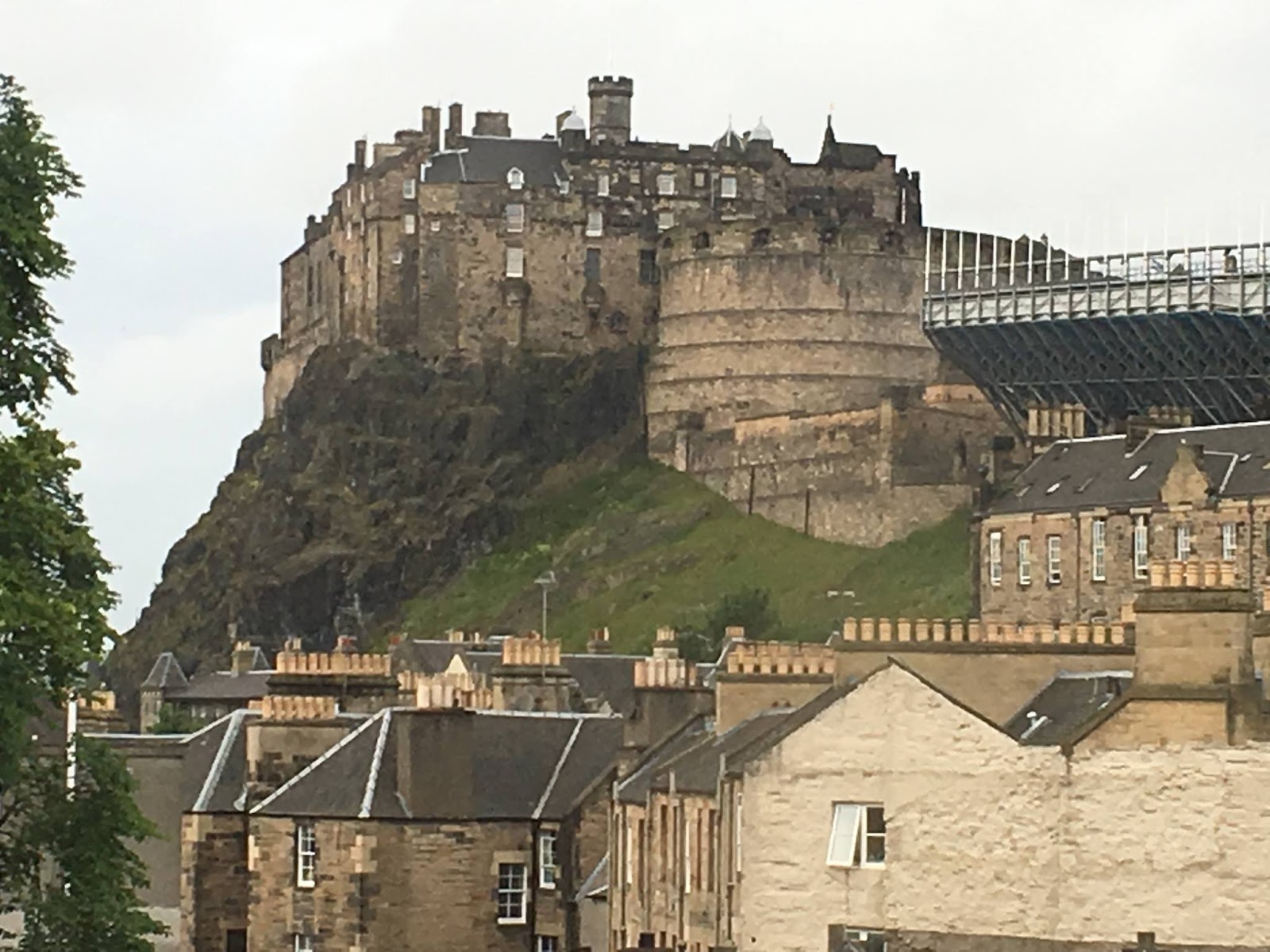
I wanted to like Edinburgh, but I didn’t like the city at first. Rain coming down didn’t help; anxiety about getting from airport to city centre to Dalkeith lodgings didn’t help either. The height of the houses, of the buildings in general, surprised me and put me off. The dirty gray and yellow and black stones of the houses also looked dingy, sooty, filthy in the cold, gray light too. But then the sun flashed out through the clouds as the wind whipped about, and a brighter face shown through. The sky in its brightness seemed higher than the sky at home, as if the sky were a ceiling however highly placed, but that’s exactly how the brightness of the light translated to me, illuminating the walls and the streets, catching the wetness of the past shower with a gleam, raising that ceiling as it were for a more expansive world.


Friday, January 8, 2016

Saturday, December 22, 2012
The Thinker(s): Orkney-Style?

My Pict (pit-fired clay; hammered copper) --
with someone else's Thor in the background.
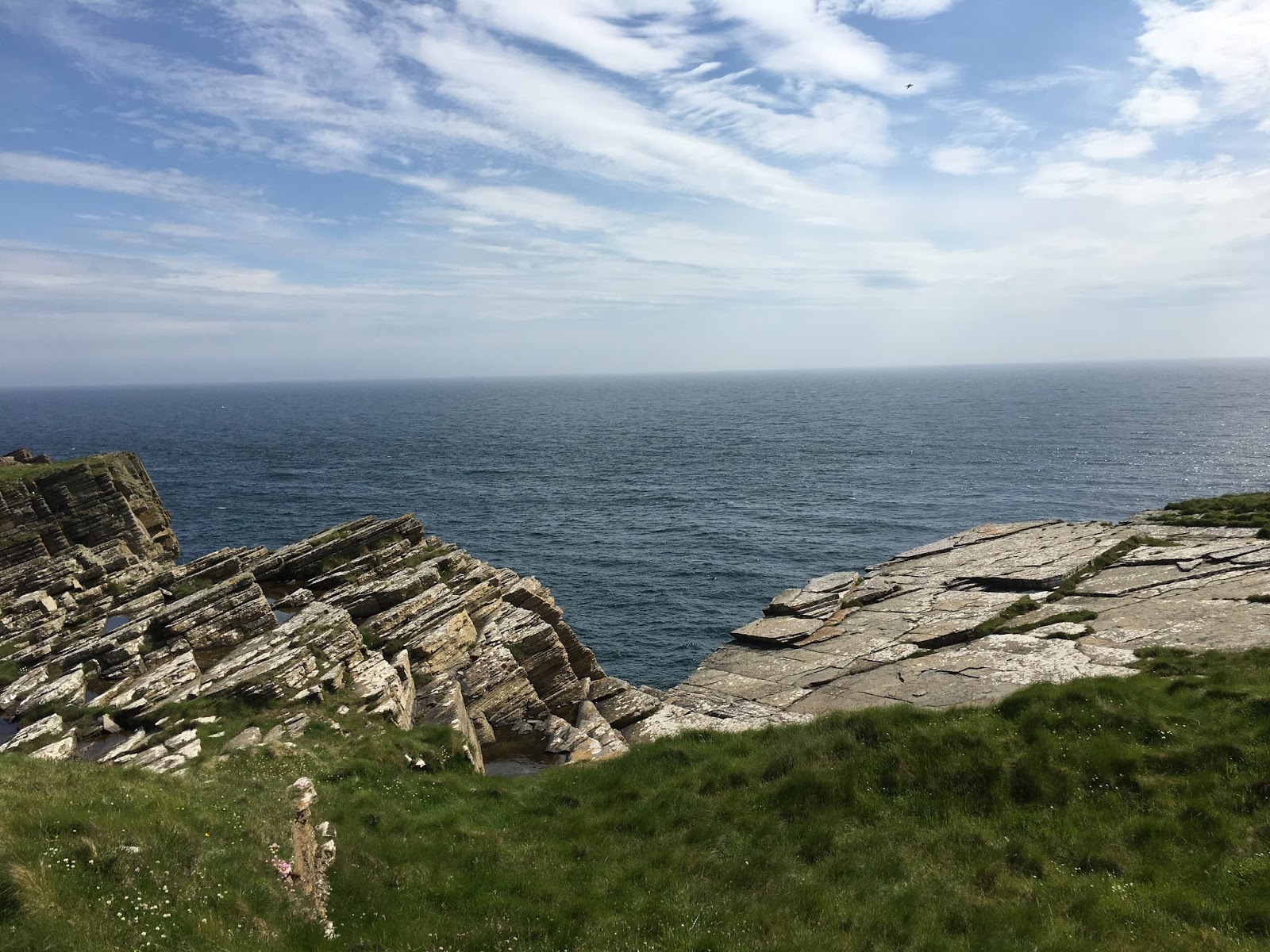
I must say that my own sense of the Orkneys comes, chiefly, from Dorothy Dunnett's treatment of those fabulous northern islands in her King Hereafter, that wonderful historical novel of Thorfinn of Orkney, of Macbeth, and of the Celtic/Pictish/Norse mixture that infused those islands. Seamus Heaney's brief references in his North, the poetry of Orkney poet George Mackay Brown, Henry Treece's historical novel Splintered Sword, the classic Orkneyinga Saga, and R. E. Howard's Bran Mak Morn have also informed my imagination here.
Unfortunately, I've yet to experience Orkney for myself, though I expect to visit in the next decade or so.
Thor as thinker? More than you might think, surely. Check the Eddas.
Thor as thinker? More than you might think, surely. Check the Eddas.
Wednesday, October 10, 2012
Why Wouldn't You?

Read, read, read.
P.S. The second International Dorothy Dunnett Day will be this November 10, 2012. For details, consider this link, please.
Saturday, September 22, 2012
Dunnett's Macbeth: Thorfinn of Orkney -- A Favorite Passage
Here's a favorite passage from Dorothy Dunnett's King Hereafter, a novel about the historical Macbeth: Thorfinn the Mighty, Earl of Orkney, King of Scotia. Frankly, Dunnett's King Hereafter is one of my Top Ten Novels of All Time, but that's an idiosyncratic list. Still.
Here, we get a crucial insight into the "secret of [Thorfinn's] success", but even as Dunnett provides Thorkel Fostri's bitter assessment, she also provides Tuathal's reflections on what Thorkel says, making a simple statement complex in the best ways. I end up appreciating the insight into the main character, even as I feel for Thorkel's frustration year after year. (And yet Thorkel deserves some of that frustration . . . and if you've read the novel, I'll bet you'd agree. "Year after year" refers both to Thorkel's relationship over time with Thorfinn and to my yearly rereadings.) There are worthy ponderings possible here: about leadership, about problem-solving, and about reciprocity and the mysteries of connection and admiration.

Did [Earl Siward of York] regret his exile? Had he envied Kalv, turning his coat so adroitly over and over, and at least buying back some years at Egge?
'Envy? He despised Kalv. Kalv was a fool,' Thorkel had said. 'There was only one man he envied.'
'He hated Thorfinn? Always? I suppose he must have done,' Tuathal had said, thinking aloud. 'Or the Lady Emma would never have risked making Siward her buffer between the rest of England and Scotia. But then, what if Siward had tried to take over Scotia?'
'Twelve years ago? Against Thorfinn's manpower, and his money, and his fleet? Even with England and Denmark behind him,' had said Thorkel Fostri with scorn, 'I doubt if he would have got a levy over the Forth. And England wouldn't have backed him. Magnus had Norway then, remember, and half a foot in Orkney already through Thorfinn's nephew Rognvald. England would rather have had Thorfinn in Scotia, I can tell you, than Siward or Norway.'
And that, thought Tuathal, was still true. Despite Thorfinn's present weakness, it was still, thank God, true. He had said, 'And Thorfinn? He's used to dealing with princes these days. Does he resent being forced to barter with someone . . . '
He had paused, having caught Eochaid's eye, to rephrase the question, but Thorkel Fostri's voice, at its most sardonic, had taken him up. 'Someone like me, from the barbarous north? Haven't you noticed yet that Thorfinn is prouder of being Earl of Orkney than he is of ruling Scotia? He fought for Orkney and won it, against men just like Siward. His own kind. He knows them too well to despise them.'
His own kind? Thorfinn was three-quarters Celt. They were not his own kind. Tuathal had said, 'So it's just another negotiation? Thorfinn neither likes nor dislikes Kalv's nephew? I find it hard to believe.'
To which Thorkel Fostri had answered in a way he had not expected. 'When did you ever know whether Thorfinn likes or dislikes a man? He takes them for what they are, and deals with them accordingly. It's the secret of his success. You don't fight the sea by getting angry at it, or persuade it to be kinder by loving it.'
The bitterness was plain to all to hear. Eochaid had got up and left, and he, Tuathal, had asked only one or two questions more.
He was not embarrassed. It merely appeared to him a paradox worth someone's attention: how a man such as Thorkel described could inspire what Thorkel undoubtedly felt for him.

Here, we get a crucial insight into the "secret of [Thorfinn's] success", but even as Dunnett provides Thorkel Fostri's bitter assessment, she also provides Tuathal's reflections on what Thorkel says, making a simple statement complex in the best ways. I end up appreciating the insight into the main character, even as I feel for Thorkel's frustration year after year. (And yet Thorkel deserves some of that frustration . . . and if you've read the novel, I'll bet you'd agree. "Year after year" refers both to Thorkel's relationship over time with Thorfinn and to my yearly rereadings.) There are worthy ponderings possible here: about leadership, about problem-solving, and about reciprocity and the mysteries of connection and admiration.
I'm putting Dunnett's passage below the photo of knife and novel. (The point of view, here, is that of Tuathal, Prior of St. Serf's, as the POV shifts throughout the novel, usefully so.)

'Envy? He despised Kalv. Kalv was a fool,' Thorkel had said. 'There was only one man he envied.'
'He hated Thorfinn? Always? I suppose he must have done,' Tuathal had said, thinking aloud. 'Or the Lady Emma would never have risked making Siward her buffer between the rest of England and Scotia. But then, what if Siward had tried to take over Scotia?'
'Twelve years ago? Against Thorfinn's manpower, and his money, and his fleet? Even with England and Denmark behind him,' had said Thorkel Fostri with scorn, 'I doubt if he would have got a levy over the Forth. And England wouldn't have backed him. Magnus had Norway then, remember, and half a foot in Orkney already through Thorfinn's nephew Rognvald. England would rather have had Thorfinn in Scotia, I can tell you, than Siward or Norway.'
And that, thought Tuathal, was still true. Despite Thorfinn's present weakness, it was still, thank God, true. He had said, 'And Thorfinn? He's used to dealing with princes these days. Does he resent being forced to barter with someone . . . '
He had paused, having caught Eochaid's eye, to rephrase the question, but Thorkel Fostri's voice, at its most sardonic, had taken him up. 'Someone like me, from the barbarous north? Haven't you noticed yet that Thorfinn is prouder of being Earl of Orkney than he is of ruling Scotia? He fought for Orkney and won it, against men just like Siward. His own kind. He knows them too well to despise them.'
His own kind? Thorfinn was three-quarters Celt. They were not his own kind. Tuathal had said, 'So it's just another negotiation? Thorfinn neither likes nor dislikes Kalv's nephew? I find it hard to believe.'
To which Thorkel Fostri had answered in a way he had not expected. 'When did you ever know whether Thorfinn likes or dislikes a man? He takes them for what they are, and deals with them accordingly. It's the secret of his success. You don't fight the sea by getting angry at it, or persuade it to be kinder by loving it.'
The bitterness was plain to all to hear. Eochaid had got up and left, and he, Tuathal, had asked only one or two questions more.
He was not embarrassed. It merely appeared to him a paradox worth someone's attention: how a man such as Thorkel described could inspire what Thorkel undoubtedly felt for him.

Sunday, October 31, 2010
Passages: Lord Byron's "A Fresher Growth"
The beings of the mind are not of clay;
Essentially immortal, they create
And multiply in us a brighter ray
And more belov'd existence: that which Fate
Prohibits to dull life, in this our state
Of mortal bondage, by these spirits supplied,
First exiles, then replaces what we hate;
Watering the heart whose early flowers have died,
And with a fresher growth replenishing the void.
--Lord Byron, from Canto IV of "Childe Harold's Pilgrimage"
The merest sampling, but a stanza that called to me, as it were.
I hadn't realized how much I miss my Byron--with all the wit, the satire, the wild stories, and the heart, the absolute heart--until I finished Dorothy Dunnett's Checkmate, the final novel in the Francis Crawford of Lymond Chronicles, her own oft-maligned, oft-misunderstood, oh so witty, skilled, and wilful Byronic hero.
I'll have to put my copies of Childe Harold's Pilgrimage and Don Juan a bit closer to hand in the evenings.
Saturday, December 26, 2009
Dorothy Dunnett's King Hereafter: A Descriptive Sample

I love this book, this novel, about the historical Macbeth, Thorfinn of Orkney. Dunnett's lively mind and comprehensive research provide a dense, demanding, rewarding reading experience. I've read and reread this book so many times that I enjoy dipping into it anywhere, which almost always draws me into rereading from the very first page. I always falter at finding the right words to describe this novel of action and intellect, force and cunning, passion and compassion. History as life, as a dynamic force or field, and thinking --mindfulness, thought undivorced from physicality and action--are the two house-pillars upon which this word-hall is built. The book is intelligent, often gorgeous, often brutal. Thorfinn is a Viking, after all.
Anyway, here's just one paragraph, selected almost at random, that I feel catches Dunnett's lively, observant, worldly style in a few sentences. Here, the people of Orkney are awaiting word of the war in Norway and they gather on the strand as the first ship with news approaches. Dorothy Dunnett's day-job, as it were, was as a portrait painter, and I think you can see some of that artistry even here in a minor paragraph from page 62.
"Instead of a clean half-moon of blue pebbles, the beach was thick as a bere-field with heads: the cloth-bound heads of married women and the shining cloak-fall of hair of young girls, as well as the cloth and leather caps, the untrimmed hair and beards of the farmers, and the smooth chins and snake-moustaches of those who had travelled and fought and fancied a foreign style would make them sound wittier. The roar of talk, as the longship's prow, sixty feet high, cut towards them, grew to a storm, pushing back the kindly sound, the surfing lap of the waves."
Subscribe to:
Posts (Atom)