Adam Nicolson's
Sea Room is a memoir concerning the Shiant Islands in the Hebrides. Nicolson inherited the islands from his father, and he pays tribute to the islands, their life and history, his own life and history as intertwined with his father's gift. Here is a longish passage in which Nicolson reflects on the Gaelic/Norse heritage, and though I don't always (or quite) agree with his interpretation of the intrinsic relationships or the causal links between borrowings, I will say Nicolson's delivery takes me into this mixed-lineage, mixed-linguistic world.
(
Freyja is Nicolson's trusty boat.)
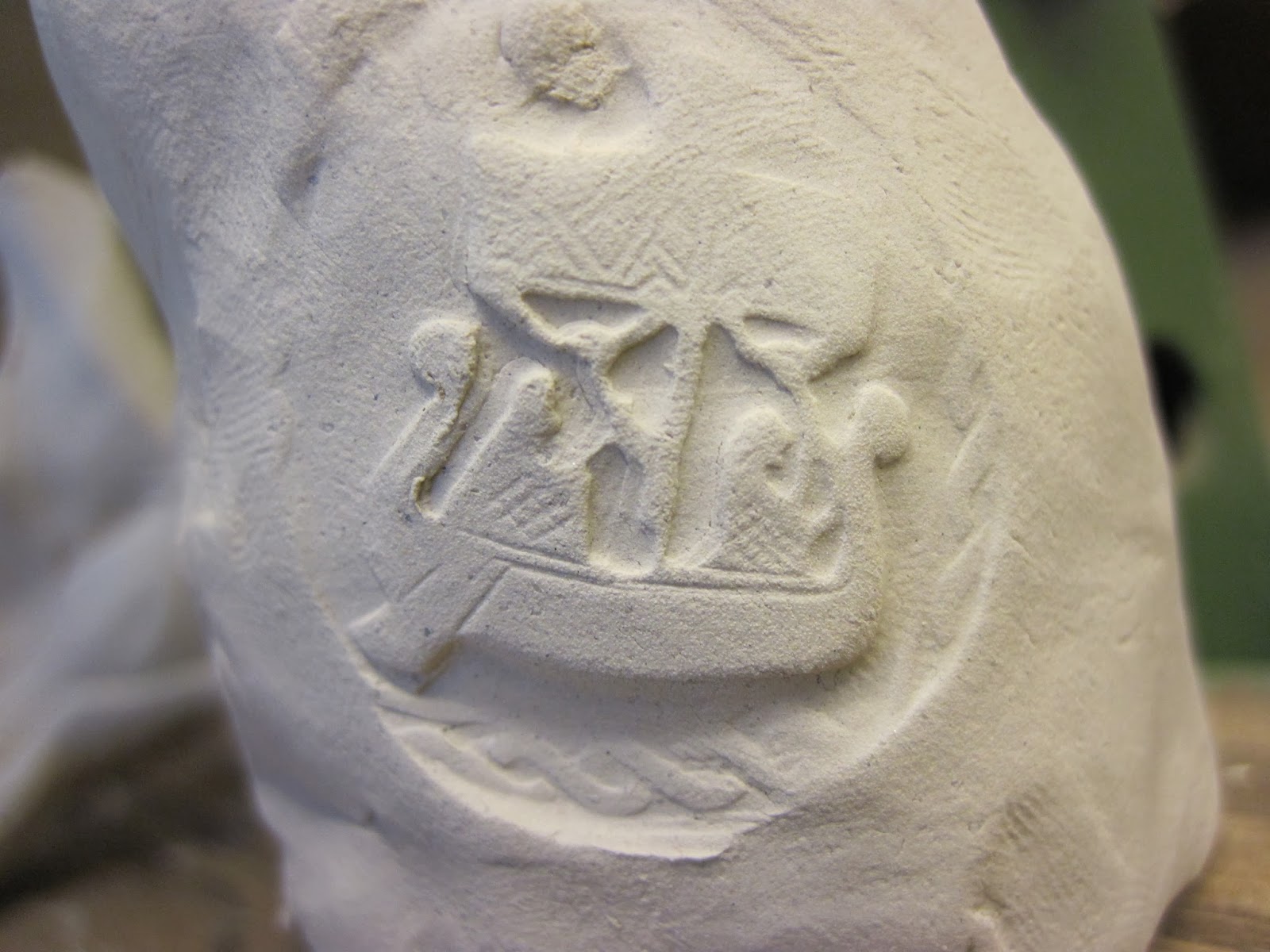
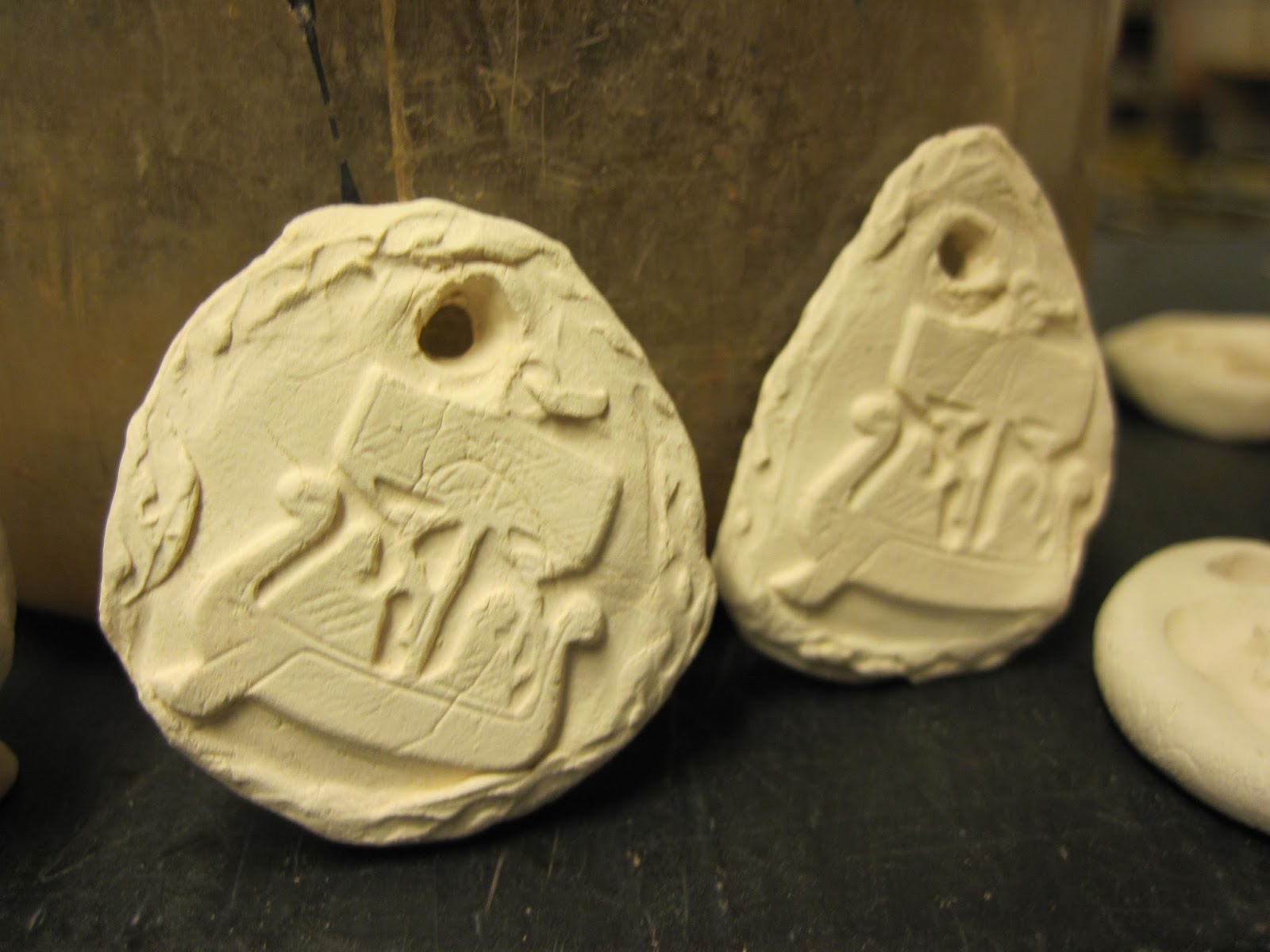
Freyja does at least belong to that world. I hold her tiller and she is my link to a chain that stretches over five hundred miles and a thousand years to the coast of Norway. Because there is no timber on the Outer Hebrides, the commercial connection with the Baltic has remained alive. Until no more than a generation ago, Baltic traders brought Finnish tar, timber and pitch directly to Stornoway and Tarbert in Harris. Although Freyja's own timber comes from the mainland of Scotland, her waterproofing below the water-line is known as 'Stockholm tar': a wood tar, distilled from pine and imported from the Baltic at least since the Middle Ages. Until well into the nineteenth century, kit boats in marked parts came imported fro Norway to the Hebrides, travelling in the hold of merchant ships, and assembled by boat builders in any notch or loch along the Harris or Lewis coast. In 1828, Lord Teignmouth, the ex-Governor-General of India, friend of Wilberforce, came out to the Shiants in the company of Alexander Stewart, the farmer at Valamus on Pairc, who had tenancy of the islands. They launched forth in this gentleman's boat, a small skiff or yawl built in Norway, long, narrow, peaked at both ends, extremely light, floating like a feather upon the water, and when properly managed, with the buoyancy and almost the security of a sea-bird on its native wave.
The British Imperialist, the liberal evangelical, member of the Clapham Sect, travels in a Viking boat on a Viking sea. I nearly called Freyja 'Fulmar' because of that phrase of Teignmouth's. No bird is more different on the wing than on the nest and in flight the fulmar is the most effortless of all sea birds. It was that untroubled buoyancy in wind and water that I was after. But Freyja's fatness was what settled it.
Almost everything in her and the world now around her, if described in modern Gaelic, would be understood by a Viking. The words used here for boats and sea all come from Old Norse and the same descriptions have been on people's lips for a millennium. If I say, in Gaelic, 'windward of the sunken rock', 'the seaweed in the narrow creek', 'fasten the buoy', 'steer with the helm towards the shingle beach', 'prop the boat on an even keel', 'put the cod, the ling, the saithe and the coaley in the wicker basket', 'use the oar as a roller to launch the boat', 'put a wedge in the joint between the planking in the stern', 'set the sea chest on the frames amidships', 'the tide is running around the skerry', 'the cormorant and the gannet are above the surf', 'haul in the sheet', 'tighten the back stay', 'use the oar as a steerboard', or say of a man, 'that man is a hero, a stout man, the man who belongs at the stem of a boat', every single one of those terms has been transmitted directly from the language which the Norse spoke into modern Gaelic. It is a kind of linguistic DNA, persistent across thirty or forty generations.
Sometimes the words have survived unchanged. Oatmeal mixed with cold water, ocean food, is stappa in NOrse, stapag in Gaelic, although stapag is now made with sugar and cream. With many, there has been a little rubbing down of the forms in the millennium that they have been used. A tear in a sail is riab in Gaelic, rifa in Old Norse. The smock worn by fisherman is sguird in Gaelic, skirta in Old Norse. Sgaireag is the Gaelic for 'seaman', skari the Norse word. And occasionally, there is a strange and suggestive transformation. The Gaelic for a hen roost is the Norse word for hammock. Norse for 'strong' becomes Gaelic for 'fat'. The Norse word for rough ground becomes peat moss in Gaelic. A hook or a barb turns into an antler. To creep -- that mobile, subtle movement -- translates into Gaelic as 'to crouch': more still, more rooted to the place. A water meadow in Norway, fit, becomes fidean: grass covered at high tide. 'To drip' becomes 'to melt'. A Norse framework, whether of a house, a boat or a basket, becomes a Gaelic creel.
But it is the human qualities for which Gaelic borrowed the Viking words that are most intriguingly and intimately suggestive of the life lived around these seas a thousand years ago. There is a cluster of borrowings around the ideas of oddity and suspicion. Gaelic itself, if it had not taken from the invaders, would have no word for a quirk (for which it borrowed the Old Norse word meaning 'a trap'), nor for 'strife', nor 'a faint resemblance' -- the word it took was svip, the Norse for 'glimpse'. The Gaelic from 'lullaby' is taladh, from the Norse tal, meaning 'allurement', 'seduction'.
The vocabulary for contempt and wariness suddenly vivifies that ancient moment. Gaelic borrowed Norse revulsion wholesale. Noisy boasting, to blether, a coward, cowardice, surliness, an insult, mockery, a servant, disgust, anything shrivelled or shrunken (sgrogag from the Old Norse skrukka, an old shrimp,) a bald head, a slouch, a good-for-nothing, a dandy, a fop, a short, fat, stumpy woman (staga from stakka, the stump of a tree), a sneak (stig/stygg), a wanderer -- all this was something new, and had arrived with the longships. Fear and ridicule, the uncomfortable presence of the distrusted other, the ugly cross-currents of two worlds, the broken and disturbing sea where those tides met: all this could only be expressed in the odd new language the strangers brought with them.
--Adam Nicolson
Adam Nicolson,
Sea Room: An Island Life in the Hebrides,
North Point Press: New York,
2001
I've quoted from pages 30-33.