Showing posts with label Depth. Show all posts
Showing posts with label Depth. Show all posts
Tuesday, July 7, 2020
Reading Notes
Sometimes, I will read any style if the subject is what I want.
Or, I will read any subject if the style is what I want.
Best practices, right?

Tuesday, August 8, 2017

Friday, August 28, 2015

Sunday, October 13, 2013
Foreground: The Pict

Alternative titles: Not Hadrian; Deep in Thought; or The Painted Man's Grasp.
Thursday, August 15, 2013
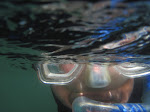
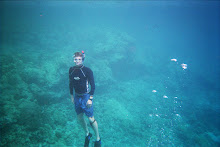
Portrait of the Artist as an Old Dogfish

Self-Portrait #52:
Kealakekua Bay, Big Island, Hawaii.
8/4/13.
Sunday, December 30, 2012
Arnold: "The Forsaken Merman"

THE FORSAKEN MERMAN
Come, dear children, let us away;
Down and away below!
Now my brothers call from the bay,
Now the great winds shoreward blow,
Now the salt tides seaward flow;
Now the wild white horses play,
Champ and chafe and toss in the spray.
Children dear, let us away!
This way, this way!
Call her once before you go—
Call once yet!
In a voice that she will know:
"Margaret! Margaret!"
Children's voices should be dear
(Call once more) to a mother's ear;
Children's voices, wild with pain—
Surely she will come again!
Call her once and come away;
This way, this way!
"Mother dear, we cannot stay!
The wild white horses foam and fret."
Margaret! Margaret!
Come, dear children, come away down;
Call no more!
One last look at the white-wall'd town
And the little grey church on the windy shore,
Then come down!
She will not come though you call all day;
Come away, come away!
Children dear, was it yesterday
We heard the sweet bells over the bay?
In the caverns where we lay,
Through the surf and through the swell,
The far-off sound of a silver bell?
Sand-strewn caverns, cool and deep,
Where the winds are all asleep;
Where the spent lights quiver and gleam,
Where the salt weed sways in the stream,
Where the sea-beasts, ranged all round,
Feed in the ooze of their pasture-ground;
Where the sea-snakes coil and twine,
Dry their mail and bask in the brine;
Where great whales come sailing by,
Sail and sail, with unshut eye,
Round the world for ever and aye?
When did music come this way?
Children dear, was it yesterday?
Children dear, was it yesterday
(Call yet once) that she went away?
Once she sate with you and me,
On a red gold throne in the heart of the sea,
And the youngest sate on her knee.
She comb'd its bright hair, and she tended it well,
When down swung the sound of a far-off bell.
She sigh'd, she look'd up through the clear green sea;
She said: "I must go, to my kinsfolk pray
In the little grey church on the shore to-day.
'T will be Easter-time in the world—ah me!
And I lose my poor soul, Merman! here with thee."
I said: "Go up, dear heart, through the waves;
Say thy prayer, and come back to the kind sea-caves!"
She smiled, she went up through the surf in the bay.
Children dear, was it yesterday?
Children dear, were we long alone?
"The sea grows stormy, the little ones moan;
Long prayers," I said, "in the world they say;
Come!" I said; and we rose through the surf in the bay.
We went up the beach, by the sandy down
Where the sea-stocks bloom, to the white-wall'd town;
Through the narrow paved streets, where all was still,
To the little grey church on the windy hill.
From the church came a murmur of folk at their prayers,
But we stood without in the cold blowing airs.
We climb'd on the graves, on the stones worn with rains,
And we gazed up the aisle through the small leaded panes.
She sate by the pillar; we saw her clear:
"Margaret, hist! come quick, we are here!
Dear heart," I said, "we are long alone;
The sea grows stormy, the little ones moan."
But, ah, she gave me never a look,
For her eyes were seal'd to the holy book!
Loud prays the priest; shut stands the door.
Come away, children, call no more!
Come away, come down, call no more!
Down, down, down!
Down to the depths of the sea!
She sits at her wheel in the humming town,
Singing most joyfully.
Hark what she sings: "O joy, O joy,
For the humming street, and the child with its toy!
For the priest, and the bell, and the holy well;
For the wheel where I spun,
And the blessed light of the sun!"
And so she sings her fill,
Singing most joyfully,
Till the spindle drops from her hand,
And the whizzing wheel stands still.
She steals to the window, and looks at the sand,
And over the sand at the sea;
And her eyes are set in a stare;
And anon there breaks a sigh,
And anon there drops a tear,
From a sorrow-clouded eye,
And a heart sorrow-laden,
A long, long sigh;
For the cold strange eyes of a little Mermaiden
And the gleam of her golden hair.
Come away, away children
Come children, come down!
The hoarse wind blows coldly;
Lights shine in the town.
She will start from her slumber
When gusts shake the door;
She will hear the winds howling,
Will hear the waves roar.
We shall see, while above us
The waves roar and whirl,
A ceiling of amber,
A pavement of pearl.
Singing: "Here came a mortal,
But faithless was she!
And alone dwell for ever
The kings of the sea."
But, children, at midnight,
When soft the winds blow,
When clear falls the moonlight,
When spring-tides are low;
When sweet airs come seaward
From heaths starr'd with broom,
And high rocks throw mildly
On the blanch'd sands a gloom;
Up the still, glistening beaches,
Up the creeks we will hie,
Over banks of bright seaweed
The ebb-tide leaves dry.
We will gaze, from the sand-hills,
At the white, sleeping town;
At the church on the hill-side—
And then come back down.
Singing: "There dwells a loved one,
But cruel is she!
She left lonely for ever
The kings of the sea."
--Matthew Arnold

Tuesday, December 4, 2012
Arnold: "With Noiseless Current Strong, Obscure and Deep"
Below the surface-stream, shallow and light,
Of what we say we feel -- below the stream,
As light, of what we think we feel -- there flows
With noiseless current strong, obscure and deep,
The central stream of what we feel indeed.
--Matthew Arnold
(1869)
Sunday, June 26, 2011
Honor Frost: The Practical Diver
I've written about my hero Honor Frost recently here, and I'd like to share a bit more from her non-fiction Under the Mediterranean. Here are two passages of worthy practical import, and which feature nail polish in particular:
Light in diving is somehow illustrated by a cathedral: for the first few metres where the windows are there is colour, but the floor below is in shade, though there is still quite enough light and one can read if one wants. The explanation of the gradual disappearance of colour underwater is, of course, that as the sun's rays diminish with increasing depth, so the world goes into monochrome. Red disappears first, after about 15 metres, yellow is the last to go at about 30. I discovered this for myself when I cut my finger at 50 metres. My blood oozed out black as ink, and when I looked at my nail varnish it was black too. I can now gauge the depth at which I happen to be swimming by the colour of my nails. (7)
and
Curiously enough, I had less difficulty in equipping myself for underwater drawing than John had had on land. Lead pencils work underwater and so do india-rubbers. Any sheet of light-coloured metal, such as aluminium, makes a serviceable tablet. Notes and drawing made in the water are traced on to paper later, so that a tablet can be re-used. When I do not have to improvise, my standard equipment consists of a portable metal drawing-board with a spring clamp down one side, such as architects use in the field. Sheets of plastic "paper", cut to size, are inserted in the spring to form a block; they can be detached after use. The only modification that had to be made to this portable board was the addition of a second clamp, held by bolts, on the opposite side of the board. Without this, the sheets tended to slip out of the spring when submerged. Plastic or metal rulers are equally serviceable in water, but for longer measurements I find that an arrow from my fish-gun (graduated in units of 10 centimetres in nail varnish) is handier. It is also less likely to be mislaid on a boat, where fish-guns are always carefully stowed. (172)
I'm always trying to match books and readers, and I do like to share the books I value, but I have yet to find another proper reader for Frost's semi-autobiographical study of the essential problems in the proper approach to understanding archaeologically marine sites and remains. The level of expertise may have been superseded, particularly with the advent of more refined technology and diving experience being embraced by serious scientists, but the comprehension of and the appreciation for the underlying issues remain timeless.
Subscribe to:
Posts (Atom)