Showing posts with label Companions. Show all posts

Saturday, May 30, 2020

The Light Here


The light here
The light there

Captain, resting.


Lady, waiting patiently while I work:


Thursday, August 8, 2019

Sofia


My trusty steed.
August 5th adventures.

Wednesday, June 3, 2015

Last Day: Motley


Motley: rest in peace, dear sprite.
April 1, 2005 - June 2, 2015.

Thank you for twenty years of love, companionship, and bossy cat pranks.

It's quite remarkable how a five-pound cat (once thirteen pounds, but still) could fill up a whole house.


Motley-girl requested another neck-rub.


Wednesday, August 6, 2014

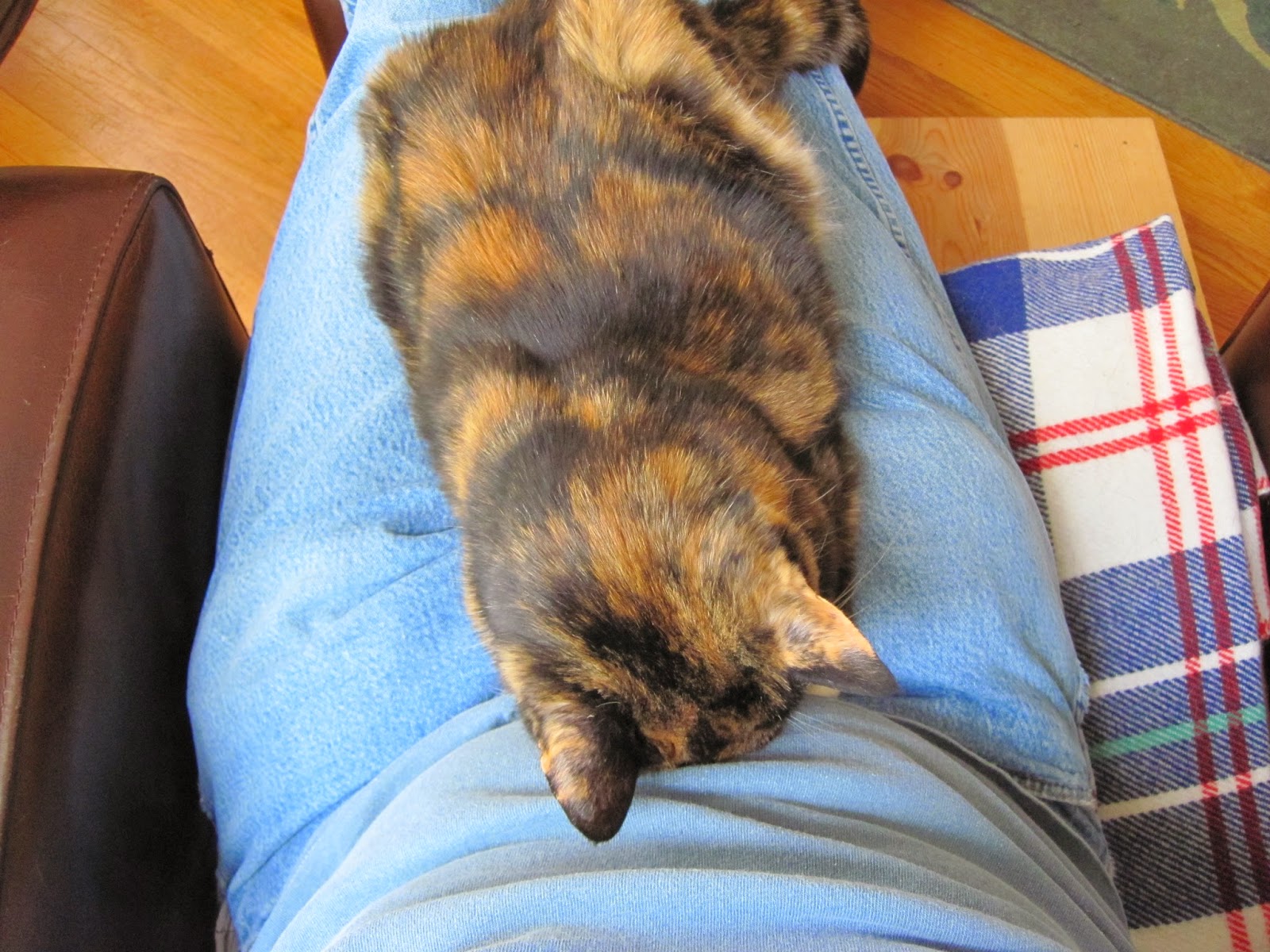
Motley: Companion


Motley: 19+ years-of-age; 7 lbs. (down from 14 at her prime); sore and sleepy.
Still a beautiful bundle of love.  Demanding, yes, but she's earned it.

Monday, September 16, 2013

Remembering Rudi: A Gallery


Rest in peace, dear me-orange-boy-o:
You fought the good fight against cancer for many years.

April 1, 1995 - September 16, 2008.

Pictures of pictures.

Sunday, August 25, 2013

Thursday, January 10, 2013

Crossley-Holland: Do You Ken?


SALT- COMPOUNDS

salt-scythe
sweeps onshore, corrosive and hissing; pins back
ears; rifles each stay, shroud and halyard.

creek-wood
the old ones, clinker-built and always thirsty;
noses blunt and bottoms glaucous; still quivering.

sea-garment
roseate spinnaker, light-breasted; no less
stiff canvas, often split and mended, grey with salt.

herring-haunt
see-through escarpments toppling and barking
as they dive through themselves into ghosts of flint.

mauve-mist
delicate as breath suspended over marsh grass;
summer carpet, wiry and tide-beaten, knotted in mud.

wave-arms
without joints, creaking and groaning; like wings
their strange spade hands salute and dip and rise.

mud-runes
ribbon-casts, blow-holes, keel-scrapes, anchor-spikes,
darts of the stitchers and strutters and mincers.

--Kevin Crossley-Holland

from his Selected Poems,
London: Enitharmon Press, 2001


Friday, September 16, 2011

"For I Will Consider My Cat . . ."


Motley: sixteen and a half years of age; still seeking out the sun.

All honor to Kit Smart and his cat Jeffrey, of course.

Thursday, November 11, 2010

Passages: Auden's "O Where Are You Going"

O WHERE ARE YOU GOING?

"O where are you going?" said reader to rider,
"That valley is fatal when furnaces burn,
Yonder's the midden whose odours will madden,
That gap is the grave where the tall return."

"O do you imagine," said fearer to farer,
"That dusk will delay on your path to the pass,
Your diligent looking discover the lacking
Your footsteps feel from granite to grass?"

"O what was that bird," said horror to hearer,
"Did you see that shape in the twisted trees?
Behind you swiftly the figure comes softly,
The spot on your skin is a shocking disease."

"Out of this house," said rider to reader,
"Yours never will," said farer to fearer,
"They're looking for you," said hearer to horror,
As he left them there, as he left them there.

-- W. H. Auden

"O Where Are You Going" is one of my favorite heroic poems; I love the theme, the characterizations, and the alliteration. (Hear the music; feel the beat.) The Anglo-Saxon Beowulf, "The Battle of Maldon," "The Wanderer," and "The Seafarer" stand behind this poem, though perhaps through the workings of William Morris, G. M. Hopkins, and Ezra Pound. (Some research just might settle that question.) Likewise, later medieval allegories and mystery plays invigorate the Modernist invocations of personae and praxis. Mostly, I appreciate how the poem partakes of ancient, traditional cadences without sounding like pastiche, without merely deriving from those past patterns. In short, the poem lives.

Auden also used an alternative title for this piece--"The Three Companions"--which reminds me of Job's "comforters." Passive versus active; stuck versus steady. The companions: reader, fearer, and horror. The hero: rider/farer/hearer. I love how the last verse pulls together all that comes before as our hero gets the last word with each nay-sayer. "As he left them there, as he left them there."