Showing posts with label Rembrandt. Show all posts

Wednesday, September 2, 2020

Gemini X 3 / 5 +9

Charting the passage of time, activities, and identity:
what I do.

There's a lot more humor and a lot less ego involved in the parade of profile pics; at least, that's the way I see it.  (Judge me, if you want, but I don't intend to lose sleep over the matter.)  I have written before of Rembrandt's many selfies and of the third-person would-be objective perspective of mirror-images offered in John Fowles' novel Daniel Martin, an old favorite.  

Tracking my age and how the lines on my face and how the gray or white hairs on my head accumulate can be a sport with different events.  Guessing where the next ache or sore muscle will appear is another such event.  I am not getting younger, right?  

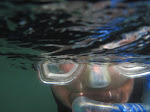
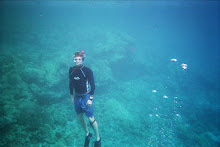
But I am also still paddling and diving and reading around and pursuing other such richly-enlivening activities.  (Man alive, I miss the studio and clay.).   I like to keep track of all those activities I am fortunate enough to pursue -- and keep track of the different people I seem to be and have been: Diver Matt, Kayak Matt, Teacher Matt, Clay Matt, and so forth.  After a long day desk-bound, there's a uplifting joy in checking what I was doing, who I was, in times past.  Sometimes, checking the last trip to Mendocino, for example, can spur me to check the weather and start making plans for the next outing,, however long or far away.  And, if that planning proves merely mental, proves merely daydreaming, that's good too.  I return to the matter at hand at the desk a bit more energized, a bit more ready to dig in.  

What with the pandemic, remote teaching, and reaching 59, I have been feeling reflective.

As a Gemini, I am used to seeing the world and myself through a two-fold lens.  
Here are a few more recent examples.

THE PADDLER:

(A) stern and serious, working at it --


B) Having fun on the water -- salt salvation --


THE VINTAGE LOOK  /  BLACK & WHITE GAMES:

(A) Ducking down an alleyway  -- "Call me Ishmael."          (Thanks, Herman Melville.)


(B) A "Pirate" Looks Toward 60?          (Thanks, Jimmy Buffett)


FULL-FRONTAL (portrait-wise):

(A) Post-dive, unmasked: 
red from too much sun and the cold cold water; 
slightly saltdrunk --


(B)  Post-paddle, pandemic ready --


This last shot: that mask gets lots of smiles, lots of laughs, from children and adults alike.  

It's a sea lion mask, technically, but many kids think it's a dog--and why not? 
Sea lions bark too, don't they?
So, I oblige.


Any man who barks in public can't take himself too seriously.


Saturday, December 28, 2013

Foolery and Rembrandt's Faint Echo


Friend:    Matt, you are absolutely the master of the selfie!

Self:    Well, that's not a thing to be proud of, entirely, but --hey-- Rembrandt created almost a hundred selfies, and he had to paint each one. My point is not that I'm a Rembrandt, but if such were good enough for him, it's golden for me. I'm the easiest model I have to work with, and I have fun with the lines, the shadows, and the (oft silly) scenes. Tomorrow, there'll probably be one with me in my new leather medieval English helmet. How can I resist?

Friend:   If I posted the ones I've tried taking, you'd see why yours are so good.  Looking forward to the helmet.

Self:    Oh, I delete so many. Oddly enough, the first few tend to be the best ones.


Aside: Watching myself age seems hardly the epitome of vanity.  The posting is a measure, a formality, a witnessing more than any sort of declaration.  Besides, who is watching?  This blog doesn't get that much traffic, frankly, and if my self-portraits bother anyone, well, they don't have to look, right?  In part, my natural diffidence has been encouraged to the point of stultification, or so it has seemed in the past, and here I'm countering that; in part, self-portraiture seems honest, an honest art, and this blog is my canvas, after all.  (Should I create a spectrum to chart Vanity/Hubris, Art/Artifice, Foolery/Foolishness?)  Finally, I also use this blog as a way of auditioning for further pursuits, attempting to woo the muses to help me with that novel, those short stories, or that documentary non-fiction; practice-sessions.  Clay feels freer than words do, and yet that doesn't feel quite right.  Posting images, self and non-self, is a way of seeing my way towards the words that matter, I am hoping.

I mean what I said above about lines and shadows and silliness and the easiest model to work with.

Also, if you look back upward at the first self-portrait I've provided by Rembrandt, will you not admire the work with lines and shadows and maybe a bit of silliness there too?  I admire so much of Rembrandt's work, and I hadn't appreciated that drawing until I posted it for this entry.  Witnessing comes in various forms, not all of them self-serving.

(I'm tempted to remake that last sentence into something metaphorical with a tree of many branches, but if I do, I just may end up hanging myself in effigy there, and I don't quite want to do that.)

Most times, I don't quite even look like myself.  Do you know what I mean?  That self in my head, that self I'm conjuring up and projecting from the images of earlier days, childhood and youth and what-have-you.  That's what I am tracking, keeping track of, witnessing.  The syntax of self over time and through time.  A quixotic quest, no doubt.  And one worthless to all but the wandering tracker.

Previously, I've reflected and quoted Fowles on the reflex toward self-representation, even excessive self-representation, as a move from subjectivity toward objectivity, from the first (and fallible) person toward the third (outsider) person, (which you may find in a link here in "Don Quixote's Mirror").

I find the grammar of self to be almost as amusing as the syntax of identity and authenticity, but that comment belongs to a separate blog entry at another time.

*Prof. Andrew Griffin taught me of Rembrandt's many self-representations in office-hour conversations in my undergraduate days.  His energy and his style have helped to shape my teaching style, among other things.  I owe him a debt I haven't yet repaid, and at this late date, I am not sure how.

The images in this entry are all photos of reproductions from and of Christopher Wright's Rembrandt: Self-Portraits, The Viking Press: New York, 1982.

Sunday, November 17, 2013

Rembrandt's Mirror; Facetious Echoes


I snapped this selfie to check the lighting from this direction at this time of day, and I both laughed at how that mask and I happened to echo each other here and found myself snagged in the rush of a memory-whirlpool.  The image pulled me towards something, someone, some other image . . . .

I had recently picked up Christopher Wright's Rembrandt: Self Portraits as a consequence of another memory-snag, though I have only flipped through some of the reproductions, haven't quite read the text itself.  I had obtained Wright's book because of my recently recalling, once again, how Prof. Andrew Griffin, one of my major influences at Berkeley, used to teach a unit on Rembrandt's self-portraits in his autobiography/biography seminar, and while I did not take that specific class from Prof. Griffin, he generously shared in office-time much about the subject.  (That the Dutch master had painted himself so often, so many times, over the course of his life was a compelling conceit to me, particularly caught as I was between Joyce's young Stephen Dedalus and my sense of the older Shakespeare-As-Lear, As-Prospero.)  I was drawn to these conversations by the professor's compelling and humorous delivery, but also by my own compulsions in the areas of self-representation and Rembrandt himself.  That Pocket Library of Great Art edition of Rembrandt pictured above was a book that just happened to be stuffed into the family bookshelves in the back bedroom I shared with my brothers, a book that I happened to discover in my childhood, far before I could understand the words or the images beyond the obvious, a book that I have puzzled over and studied from my earliest years.  I have carried that book from the family home to my first apartment and to every subsequent dwelling, though I can't say that I've actually looked into or, perhaps, even at this pocket volume for years and years now until today.

Still, once I looked away from my mask laughing in the background and thought, "What image am I aping (unconsciously) here?", well, "Rembrandt -- the cover portait!was the immediate answer.  (I was then compelled to root out that specific volume, though that took two days.)  Now, reading this and comparing (contrasting?) the two images may not bring such an answer to your mind.  The link may be more emotional than anything else.  As a maker, I bow with the utmost respect from a station far far below the great Dutchman.  And, as a child, I was probably fascinated by the age, the agedness, in that cover shot, by the old, old man with the funny hat.  As an adult, Rembrandt seems steady, steadfast and sober, weighing himself in the scales of life, not entirely happy with the balance at hand; the artist doesn't seem near as old, either, as he must have seemed in my relative infancy.  But my peers will understand that shiftiness of perspective, I think.  (There's a key scene in John Fowles' Daniel Martin in front of one of Rembrandt's portraits, perhaps this one, and that novel was quite formative as well.  Another echo, another mirror.)  Even as a boy and a young man, I'll bet Rembrandt's gaze held me, for it certainly holds my own gaze even now.  Rembrandt's mirror, each of us looking at, looking into, this portrait, don't you think?

Maybe so; maybe no.  Hats, brows, noses, lines, chins, cheeks: I see likenesses, though differences too.  I could have dressed the part, certainly, to heighten the linkages, but that's an accidental shot, more or less.  Anyway, the way I'd like to see it, the Dutchman's looking back at me, back at us; and, I'm looking at him, at you.

Facetious echoes, as I've announced above.

The mirror, I'm forgetting: the mirror and the making.  Rembrandt is gazing into that mirror, that reflective canvas, into himself, weighing and balancing; and, therefore, he's a fine model for yet another painting; therefore, a fine model for himself and for us.